
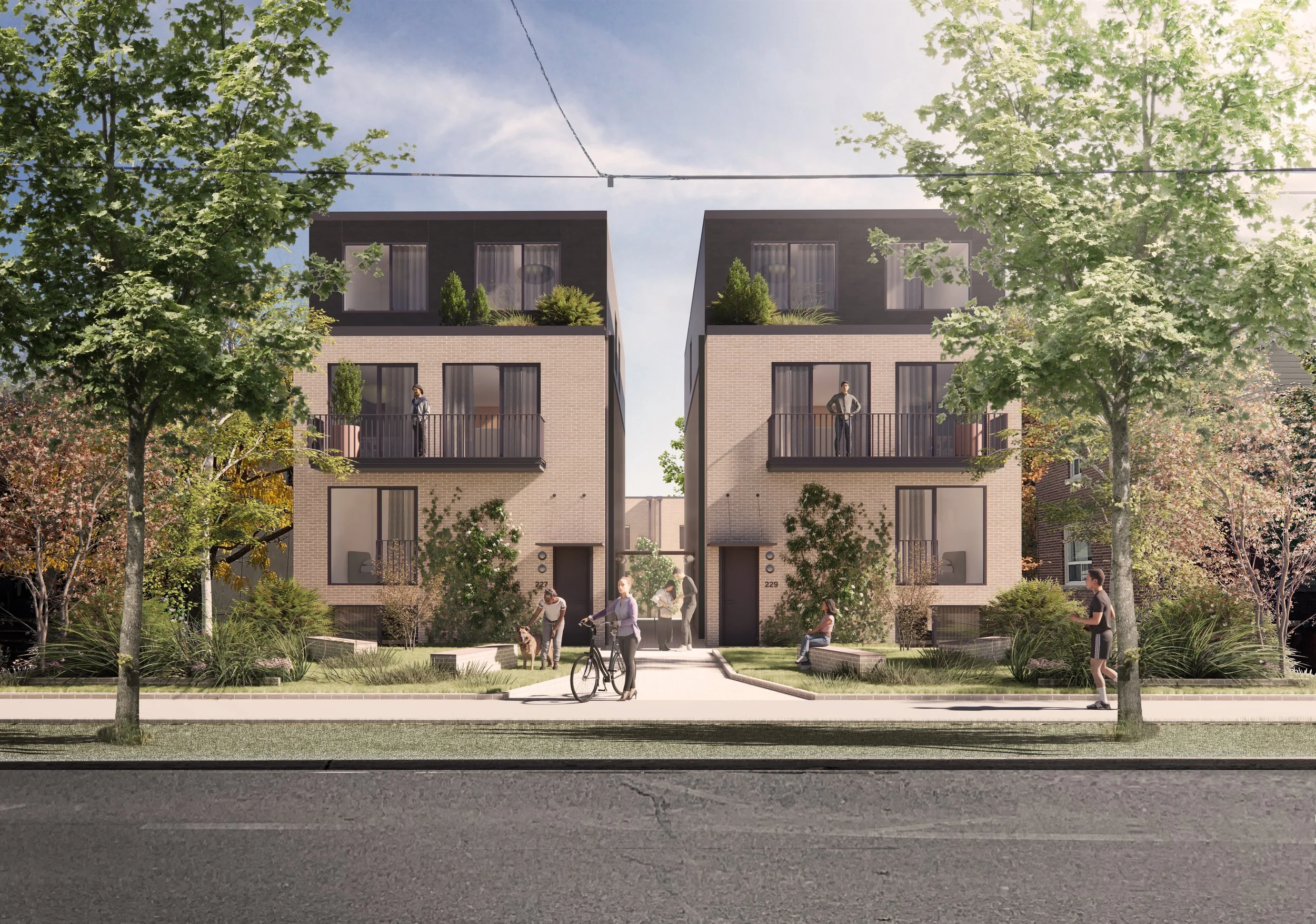
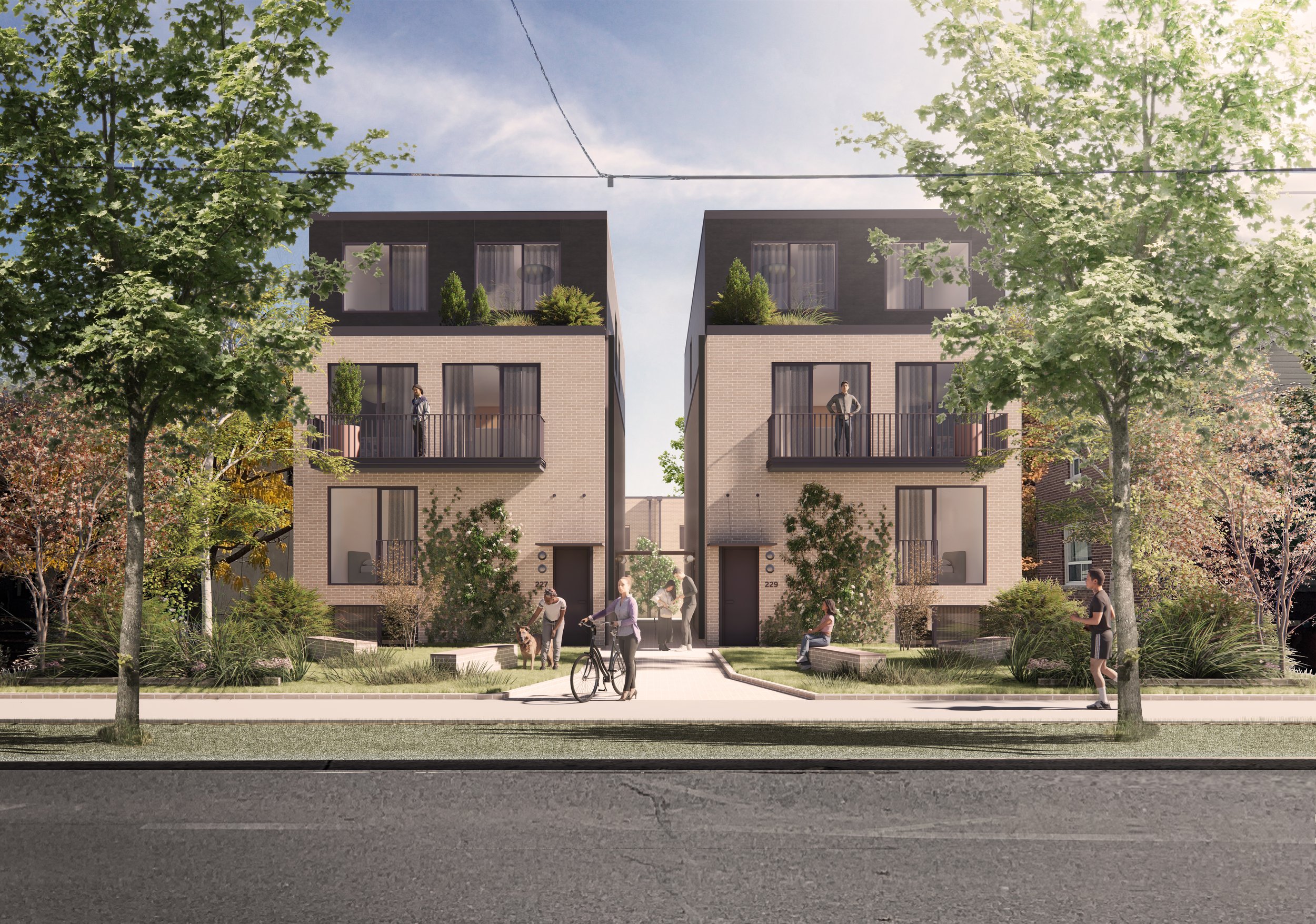
East End 6-Plexes “GB”
Sixplexes in Toronto’s East End, with garden suites at the rear.
| Location: | Toronto, Ontario |
|---|---|
| Status: | Submitted for permit |
| Date: | 2025 - Present |
Toronto has recently updated its housing policies to allow sixplexes—low-rise buildings with up to six separate residential units—as-of-right in select parts of the city as a way to boost “missing middle” housing supply and gently increase density in established neighbourhoods. Under the 2025 zoning changes, sixplexes are now permitted without rezoning in nine specific wards across the Toronto & East York area plus Scarborough North (Ward 23), covering areas from Parkdale–High Park through downtown and into East York. Property owners in those wards can build sixplexes on detached lots, and councillors in other wards may opt in later if they choose.
Against this backdrop, Office Ou is now engaging with this emerging housing typology by designing multi-unit residential projects suited to the new sixplex allowances. Our design approach—seen in other recent small-scale apartment work and prototypes—focuses on efficient spatial layouts and thoughtful integration with neighbourhood character, to unlock feasible, affordable small multifamily housing on typical urban lots.
These sixplexes both have garden suites and are expected to be completed in mid-2026.
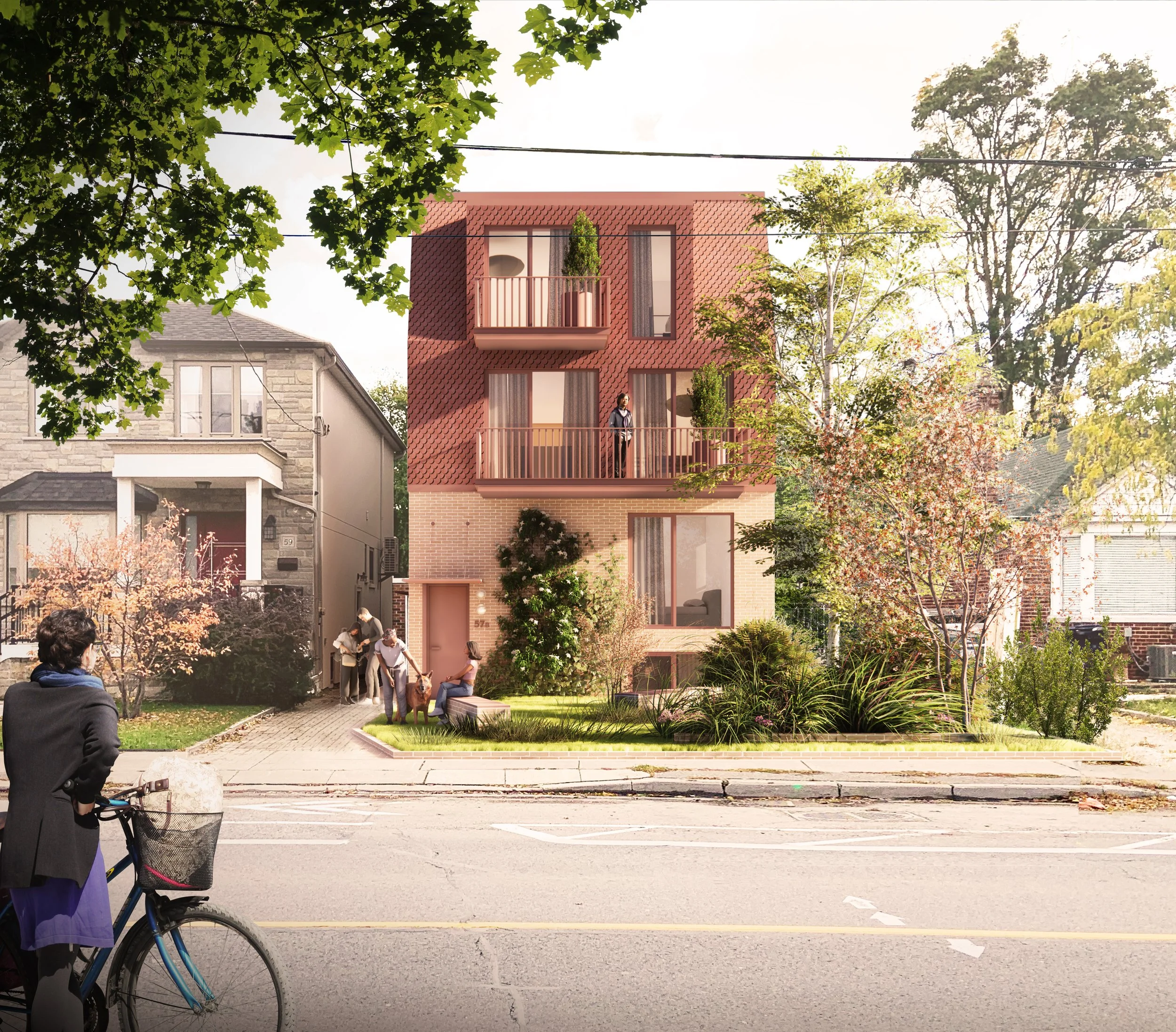
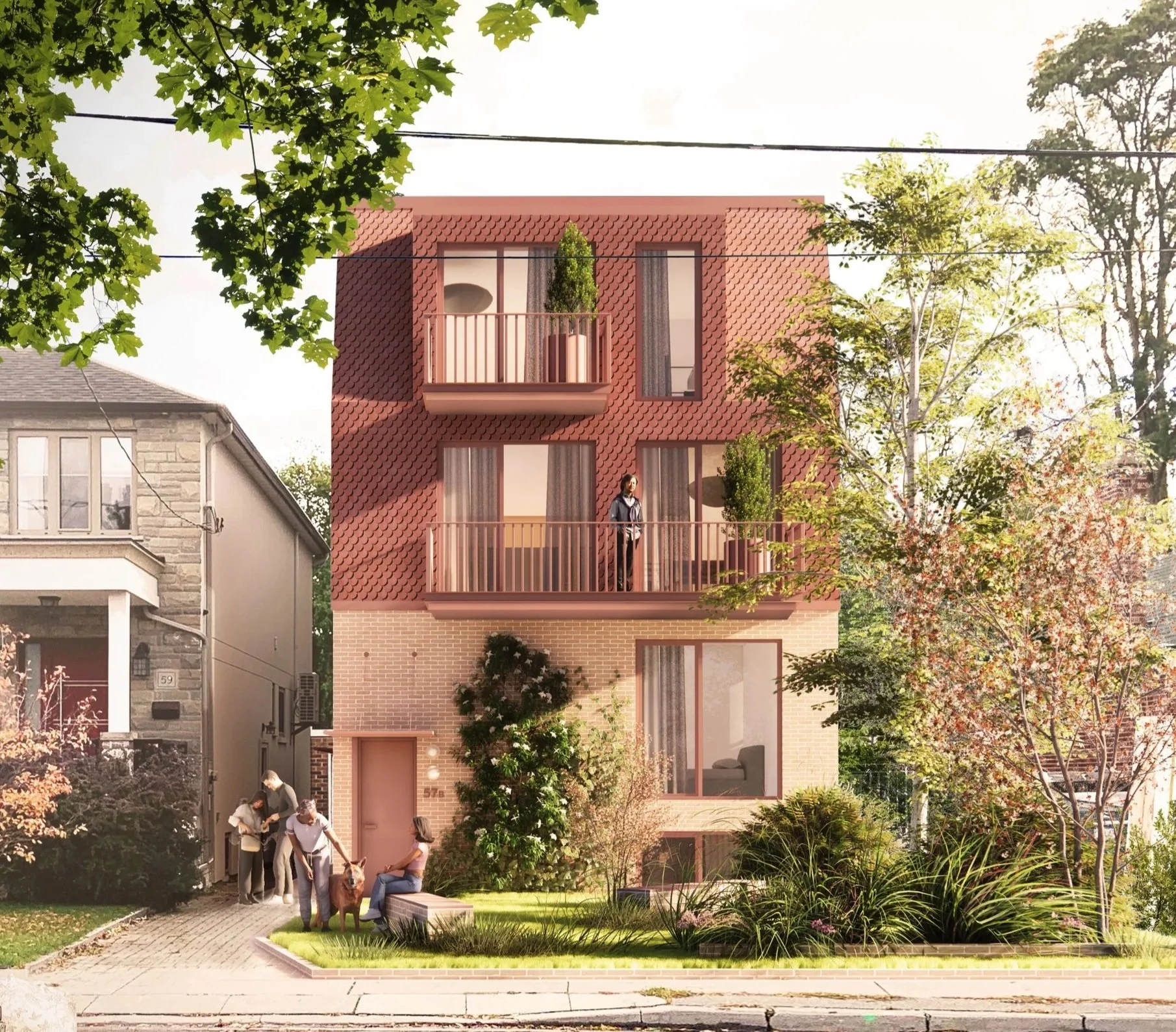
East End 6-Plex “OC”
Sixplex in Toronto’s East End, with a garden suite at the rear.
| Location: | Toronto, Ontario |
|---|---|
| Status: | Permit obtained |
| Date: | 2025 - Present |
Toronto has recently updated its housing policies to allow sixplexes—low-rise buildings with up to six separate residential units—as-of-right in select parts of the city as a way to boost “missing middle” housing supply and gently increase density in established neighbourhoods. Under the 2025 zoning changes, sixplexes are now permitted without rezoning in nine specific wards across the Toronto & East York area plus Scarborough North (Ward 23), covering areas from Parkdale–High Park through downtown and into East York. Property owners in those wards can build sixplexes on detached lots, and councillors in other wards may opt in later if they choose.
Against this backdrop, Office Ou is now engaging with this emerging housing typology by designing multi-unit residential projects suited to the new sixplex allowances. Our design approach—seen in other recent small-scale apartment work and prototypes—focuses on efficient spatial layouts and thoughtful integration with neighbourhood character, to unlock feasible, affordable small multifamily housing on typical urban lots.
This sixplex with a garden suite in the East End has received its building permit and is expected to be completed in mid-2026.

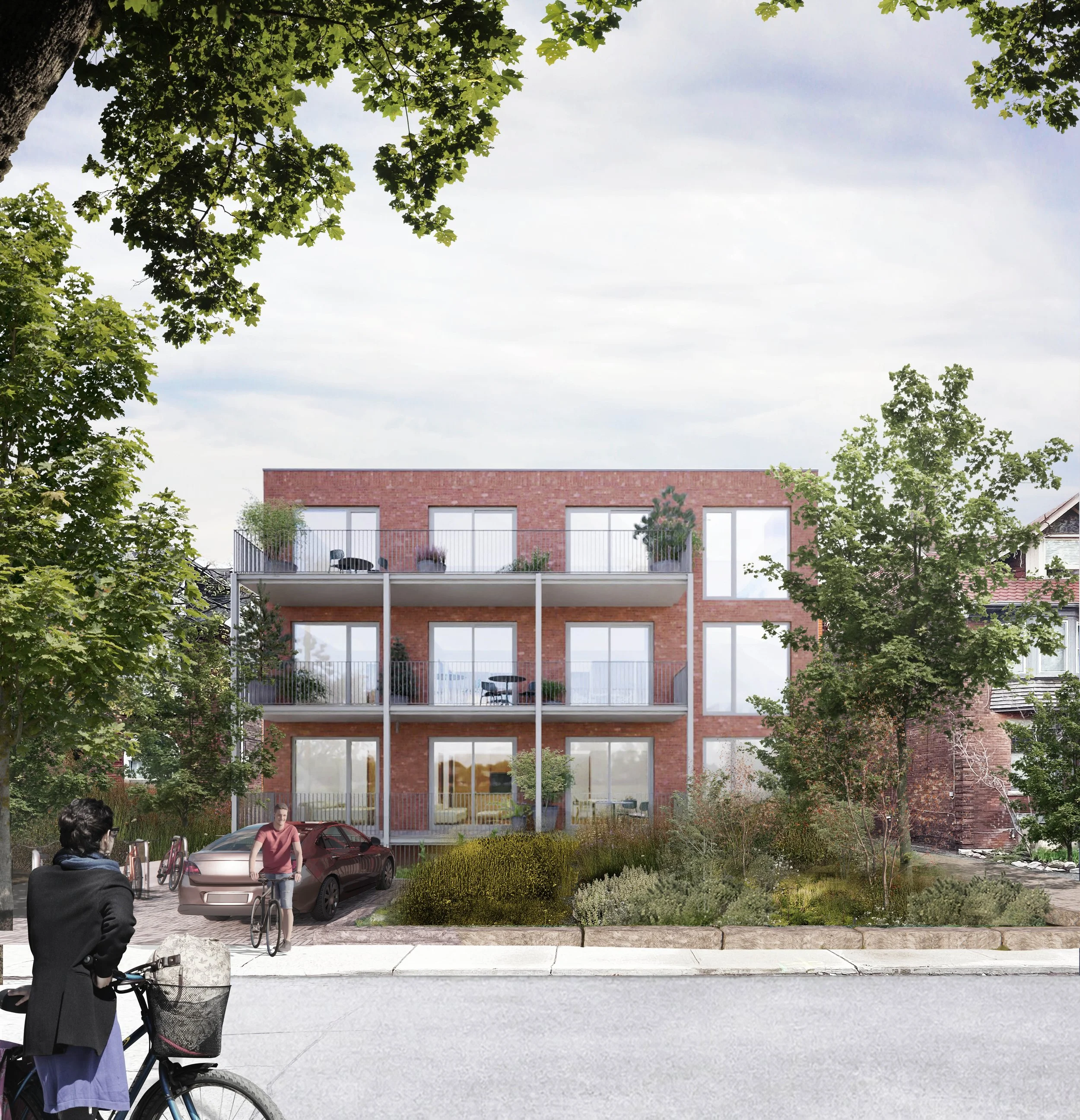
Delaware "Missing Middle" Development
This 3-story “missing middle” apartment building design provides 6 dwelling units of different sizes and configurations (to foster socio-economic diversity), and aims to be one of the first single exit stair buildings in Toronto.
| Location: | Toronto, Ontario |
|---|---|
| Status: | In Progress |
| Date: | 2024 - Present | Consultants: | Kieffer Engineering, Vortex Fire, Conrad Speckert |
The client acquired two semi-detached houses that lay vacant for decades. The aim was to bring new housing opportunities to an underused site, and to create a contextually-appropriate “missing middle” building that feels like a community. The 3-story building contains six dwelling units of varying sizes. One basement dwelling unit, one two-storey dwelling unit split between the basement and ground floor, one ground floor unit, two second floor units, and a large third floor unit (for a total of 6 dwelling units and total of 15 bedrooms). An entrance lobby and mail room are located on the ground floor; a mechanical room and bicycle room are located in the basement. The building is also designed to support aging-in-place, as all units are provided with elevator access.
On November 20, the building received the approval of a Single Stair Alternative Solution from the City of Toronto. Planned for a mid-block site at 157 Delaware Avenue, the three-storey small apartment building becomes the first fully barrier-free accessible design to be approved with this configuration.
Paving the way for a building permit and the start of construction, this alternative solution also represents a key milestone towards broader acceptance of single stair buildings in Ontario. Office Ou worked closely with the fire safety engineers at Vortex Fire Consulting to develop the proposed alternative solution. To achieve a better level of safety than typical buildings with two exit stairs, the alternative solution provides an automatic fire sprinkler system, increases the stair width from the Ontario Building Code minimum of 0.9m to 1.2m, improves the fire rating of the exit enclosure and provides a positive pressurization fan and leakage-rated doors to protect the stairwell from the spread of any smoke. These measures provide a level of safety that is better than prescriptive Ontario Building Code compliance with two staircases.
More broadly, this Alternative Solution is an important achievement for “missing middle” housing in Toronto. For the project at 157 Delaware — as well as numerous similarly-scaled small residential buildings planned across the city — a single stair solution enables more efficient, light-filled and generous residential layouts. This configuration also makes it possible to provide an elevator and unlock the feasibility of accessible low-rise housing, suitable for aging-in-place and multi-generational living, especially on smaller properties across the city.
“The Alternative Solution unlocks fully accessible low-rise apartment buildings with generously sized suites, unlocking a potential new market of low-rise apartments in residential neighbourhoods, with spaces that are particularly well-suited to downsizers and young families,” says Office Ou co-founder Uros Novakovic.
Rooted in fire safety standards developed in the 1940s, the strict code requirements for two exit stairs regardless of building size has become increasingly clear as a barrier to building more missing-middle housing in urban areas across Canada. In Toronto, the policy has contributed to a built environment defined by a stark contrast of high-rise towers and single-family sprawl. The approval of this Alternative Solution is an important step towards an emergence of multiplexes and small apartment buildings in alignment with recent zoning reforms across Canada.


